












Air purifiers for airborne mould spores
Reduce airborne mould spores and secure product quality, shelf life, and working environment
- Improved product quality
- Reduced contamination risk
- Increased product shelf life
- Safer working environment
A controlled environment
starts with the air
In industrial and production environments, mould is a risk that affects product quality, shelf life, and the working environment. What spreads through the air are mould spores – the microscopic “seeds” of the fungus – and it is these airborne particles that an air purifier can capture. With QleanAir’s professional air purifiers, the concentration of airborne mould spores on the premises is reduced, creating a cleaner, more controlled environment.
- Improved product quality
- Reduced contamination risk
- Increased product shelf life
- Safer working environment
Recommended air purifiers for airborne mould spores
-

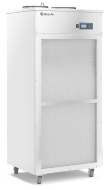
QleanAir FS 70 FG II Standard
Made for the demanding food & beverage industry
-

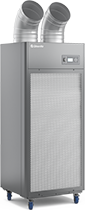
QleanAir FS 70 Standard
A versatile and efficient air cleaner for a wide range of applications
-

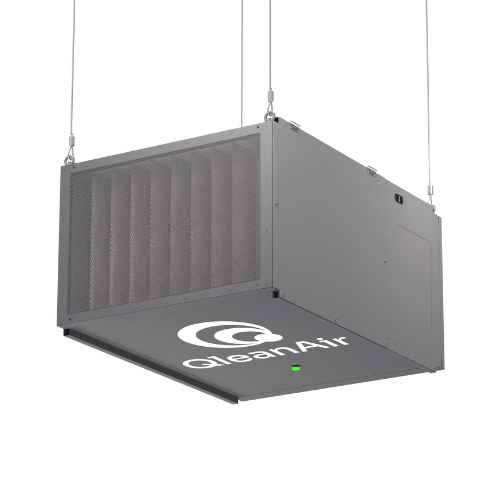
QleanAir FS 60 Standard
A lightweight, high-performance air cleaner for industrial applications
-

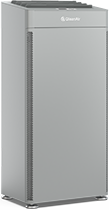
QleanAir FS 35 Standard
Efficient yet quiet in a small footprint
How do airborne mould spores affect business operations and the working environment?
Mould spores exist naturally in the air but can quickly become a problem in humid or poorly ventilated production environments, where elevated spore levels increase the risk of spores germinating and new growth establishing on surfaces and products. This affects both product quality and human health, especially in food and beverage production, warehouses, and industrial facilities.
When the level of mould spores in the air increases, it can lead to several negative effects:
- Health impact – airborne mould spores can cause allergic reactions, respiratory problems, and exposure to harmful substances
- Damage to materials and products – if spores take root on damp surfaces or raw materials, mould growth contributes to biological degradation that can spoil food, shorten shelf life, and damage property
- Deteriorated operational quality – high spore concentrations increase the risk of contamination and can jeopardize product quality, hygiene requirements, and traceability in production and storage
- Spread in the indoor environment – damp areas and ventilation systems can spread mould spores further and worsen the problems
Mould or mould spores – what is the difference?
The difference between mould and mould spores is crucial to understanding what air cleaning actually achieves:
- Mould (the mould fungus) is the organism itself – a network of threads (mycelium) that grows attached to a surface where moisture and nutrients are present. In a production or warehouse environment, this is typically floor drains, walls and ceilings, condensation surfaces, ventilation ducts, raw materials, or packaging materials. The mould fungus does not float in the air and therefore cannot be filtered out – it must be remediated on site and the moisture feeding it must be addressed.
- Mould spores are the reproductive units of the fungus – very small, lightweight particles (approx. 2-10 µm) that are released into the air and transported by air currents and ventilation. If a spore lands on a damp surface, it can germinate and start new mould growth in another location within the facility.
This is where the air purifier is effective: it acts on what is airborne – the spores and particles – thereby breaking the chain of transmission inside the room before new spores have time to take root. However, it does not remove mould already growing on a surface. Both measures are needed and complement each other: remediation and moisture control remove the source itself, while air purification keeps airborne spread down in the meantime.
How can airborne mould spores be managed with air cleaning?
Airborne mould spores can be reduced with effective air cleaning directly in the production or warehouse environment. By actively working with indoor air quality – for example with an air purifier for mould spores, it is possible to reduce the spread and create better conditions for both the working environment and operations. The best effect is achieved when air cleaning is combined with remediation of existing growth and addressing the moisture source.
Freestanding air purifiers can contribute by:
- Capturing mould spores in the air – before they have time to spread further and germinate on new surfaces or products
- Reducing cross-area spread – limiting how spores are transported through the facility
- Complementing the ventilation – improving indoor air quality where it is insufficient
- Being placed where the need is greatest – for example in damp, critical, or exposed production areas
- Stabilizing indoor air quality over time – smoothing out variations in spore concentration
-

Improved product quality
-
Reduced contamination risk
-
Increased product shelf life
-
Safer working environment
Would you like to improve the indoor air quality in your operations?
We help you find a solution tailored to your needs.
QleanAir's air purifiers for mould spores
QleanAir offers professional air purifiers for mould spores that effectively capture mould spores and other airborne particles, creating a cleaner and more controlled indoor environment. With over 30 years of experience and close collaboration with the food industry, we have developed food-grade air purifiers that meet high standards of hygiene, indoor air quality, and operational reliability. Advanced filtration also removes very small particles, contributing to more stable production, a better working environment, and reduced contamination risk.
- Effective filtration of airborne mould spores – HEPA or EPA filters capture spores and other extremely small particles
- Adapted for demanding environments – food-grade solutions developed for strict hygiene requirements
- Flexible installation – floor-standing, wall-mounted, or ceiling-mounted air purifiers
- Ongoing service and maintenance – ensures continuous operation and sustained performance
- Seamless integration – installation without interfering with existing ventilation minimizes operational disruptions
Our technology - High-performance air cleaning

Our technology - High-performance air cleaning
-
Innovative multi-stage filtration for efficient airflow over time
QleanAir's air cleaning technology is developed to ensure a constant airflow of clean indoor air over time. Through efficient multi-stage filtration and controlled recirculation of purified air, stable and safe air conditions are created without emitting any harmful by-products. Combined with our service offering, the technology delivers high and reliable air cleaning with maximum clean air per sum invested.
Related news and customer references
-
- Article
- Air Cleaners

Cleaner Air, Safer Food: New Food-Grade Air Cleaner Sets New Standard for Hygiene, Productivity, and Product Quality
-
- Customer Story
- Air Cleaners

“With air cleaners we have a healthier working environment: fruit and vegetables have better durability, ventilation and cooling works better.”
Logistics Manager, Food Retailer
-
- Customer Story
- Air Cleaners

”We have both floor-standing and ceiling-mounted air cleaners. The fact that the floor-standing units are mobile and can be moved to where the need is greatest is a major advantage for us. The ceiling-mounted units make both cleaning and forklift operations in the facility easier. The combination is important to us.”

Titoo Karim
Technical Manager, Engelhardt
-
- Article
- Air Cleaners

Preventing Contamination During Food Production
-
- Article
- Air Cleaners
A clean conscience
In which environments are airborne mould spores a common problem?

FAQ: Frequently asked questions about air purifiers & mould
-
No. An air purifier captures airborne mould spores and stops them from spreading in the premises, but does not remove actual mould growth on surfaces. Surfaces must be remediated on site. Air cleaning is a complement to remediation and moisture control.
-
No. Mould requires moisture to grow, so the source must be addressed through remediation and moisture control. An air purifier limits the airborne spread of mould spores in the meantime – the best effect is achieved in combination.
-
Mould spores are particles and are effectively captured by HEPA or EPA filters. Particle-bound substances such as mycotoxins are also filtered out. Mould odour (gaseous MVOC), on the other hand, requires activated carbon – a particle filter alone will not remove the odour.
-
Where spore levels could reach high levels or sensitive products are handled – damp or poorly ventilated spaces, areas near floor drains and wet processes, as well as zones with high contamination risk. Free-standing air purifiers are placed where the need is greatest and complement the ventilation.
Contact us
We know the difference clean air can truly make and are happy to help you find the right solution for your business.