Today’s modern warehouses are high-tech production environments where precision is crucial. Automated flows, robots, and advanced control systems create efficiency and scalability, but as technology takes over, vulnerability also increases. One of the logistics industry’s most underestimated operational risks is dust.
When dust and airborne particles in the warehouse are allowed to circulate freely, they quickly turn from a cleaning issue into a serious threat to both operational reliability and profitability.
Here, we explore how you can protect your investment against one of the logistics industry’s largest, yet often most underestimated, operational risks: dust.
Dust problems in warehouses – more than dirt on the floor
In a warehouse, particles originate from many sources: cardboard, wooden pallets, packaging, tire wear, and external pollutants entering through doors and forklift traffic.
These particles then circulate in the air and can have devastating consequences when they find their way into sensitive technology.
Common consequences of dust problems in warehouses are:
- Dirty sensors: Cause incorrect readings and flow disruptions.
- Overheating: Dust clogging ventilation in control cabinets and motors
- Mechanical wear: Increased friction on robotic arms and conveyors
- Unplanned downtime: Expensive hours of troubleshooting and emergency cleaning
- Shorter lifespan: Critical components wear out prematurely.
Protect key equipment from dust – before it leads to downtime
Protecting key technology against dust is about shifting from reaction to prevention. Instead of resolving issues after damage has already occurred, you need to work systematically with preventive air quality control. By reducing the amount of airborne particles throughout the warehouse, especially around critical automation, you create stable conditions for technology to perform exactly as intended over time.
This includes:
- Fewer airborne particles that can reach sensitive components
- More stable temperatures in technical rooms
- Reduced load on machines’ internal cooling systems
- Highly predictable operations over time
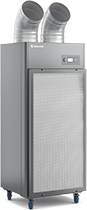
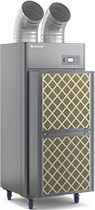
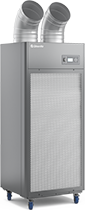
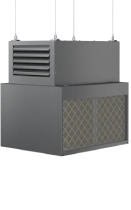
Read more about our air cleaners for dust
Operational reliability in logistics starts with the air
When discussing operational reliability in logistics, many focus on software systems and spare parts management. But the air is the foundation required for these systems to function optimally.
Airborne particles in the warehouse affect not only the technology, but also overall operational efficiency. By taking a proactive approach to air quality, warehouse operations can reduce the risk of bottlenecks and unexpected stops, especially in highly automated environments.
From reactive to preventive practices
Many organizations only discover the problems dust can cause once issues have already occurred, such as downtime, a sensor error, or a production interruption. Corrective measures then tend to be urgent, costly, and difficult to plan.
Instead, a preventive approach involves:
- Identifying where particles originate
- Protecting critical zones with sensitive technology
- Creating a stable and clean operating environment over time
- Continuous air cleaning, ensuring particles are captured before they settle on equipment.
This represents a strategic shift from fixing problems to eliminating the root cause of wear and tear.
Summary
As warehouses become increasingly automated, the demands for stable operating conditions also grow. Dust and particles are an invisible risk that can cause costly downtime, reduced performance, and a shorter lifespan for technical equipment.
Taking control of airborne particles in the warehouse is therefore not a routine cleaning measure; it is a key strategic investment in operational reliability, efficiency, and the future of logistics.
Want to know how to secure your flows? Ensuring that sensors and other key equipment remain clean often requires an industrial air cleaner for warehouses that cleans the air continuously, right where dust moves.
Take a step closer to cleaner air
We are with you on the path toward a healthier, safer, and more productive working environment. Contact us for a free consultation.
Contact us