Matz Blechingberg has extensive experience from Finnish industry and currently works with industrial air cleaning at QleanAir Scandinavia in Finland. QleanAir is a Swedish company with a global presence and over 35 years of experience in developing air cleaners for industrial and professional environments. In his role, Matz works closely with Finnish industrial companies seeking to develop their operations, where better indoor air quality can contribute to a safer and better working environment while creating good conditions for efficient production and long-term sustainability efforts.
“Particles and other air pollutants arise naturally in many industrial processes. They are not always visible, but can affect both the people working there and products, machinery, and processes. In the same way as other risks in the working environment and production, it is important to work systematically with indoor air quality, both for a safe and secure working environment and to create better conditions for efficient and well-functioning production,” says Matz.
When you meet companies in industry, what needs do you see regarding indoor air quality?
Different operations have different processes and thus different conditions when it comes to indoor air quality. In metalworking, for example, welding, grinding, and machining are common processes that generate welding fumes, grinding dust, oil mist, and other airborne particles.
An important aspect is that particles do not always remain where they originate. They can spread further throughout the facility and affect other parts of the production environment, while not everything is visible to the eye. Therefore, it is important to understand how pollutants move within the premises and where the need for air cleaning is greatest.
Why is indoor air quality an important issue for industry?
For many companies, the issue begins with care for the employees. In industry, a systematic approach to safety is a natural part of operations. Clean air is part of occupational safety, just like other measures that reduce risks in the working environment.
But the value of clean air often extends further than that. Airborne particles can reach products, machinery, and equipment. A cleaner production environment can contribute to less contamination and reduced cleaning needs, while also protecting sensitive equipment and processes, reducing the risk of downtime, and creating better conditions for stable and well-functioning production.
A clean and well-maintained production environment can also be a strength when companies want to attract and retain talent. In this way, indoor air quality can be part of broader work on the working environment, quality, and sustainability.
Many industrial companies already have ventilation and local exhaust ventilation. Why and when is supplementary air cleaning needed?
Well-functioning ventilation plays an important role in the production environment, but ventilation and air cleaning serve different functions when it comes to indoor air quality. Ventilation exchanges the air in the room, while local exhaust extraction or process ventilation captures contaminants close to the source. However, particles that are not captured can spread further into the production environment.
By supplementing with industrial air cleaners, the air can be continuously recirculated and filtered so that particles spreading through the facility can be captured, for example when doors to CNC machines are opened. It is not about replacing ventilation or local exhaust ventilation, but about supplementing existing systems based on the needs of production. Standalone air cleaning can also be relevant for older machinery or processes where local exhaust ventilation is missing or difficult to install.
You have extensive experience in Finnish industry yourself. How does that help you in your work today?
My industrial background makes it easier to understand different operations and processes. No two production environments are alike. Before we start talking about products, we need to understand what the customer wants to improve and what conditions exist in production.
What does it mean to be able to meet the customer and see production on site?
It makes a big difference. On site, we can see where particles originate, how the premises are used, and how production operates. This provides a better foundation for assessing the need and discussing potential solutions.
Production environments also change over time. Machinery is moved, production flows evolve, and new needs can arise. In those cases, it is valuable to know the business and be able to continue the dialogue with the customer.
How do you proceed when a company wants to improve indoor air quality?
We start by understanding the current situation and what the customer wants to achieve. Next, we visit the production facility to see which processes are running, where particles originate, and how the premises are laid out. Based on that, we can assess the need and size a solution. We also have the opportunity to test the solution in the actual production environment, allowing the customer to evaluate how it works before taking the next step.
What sets different air cleaning solutions apart, and what should an industrial company look for?
The most important thing is that the solution is tailored to the specific needs. Capacity and filtration need to suit the contaminants being handled, but placement and flexibility also play a major role.
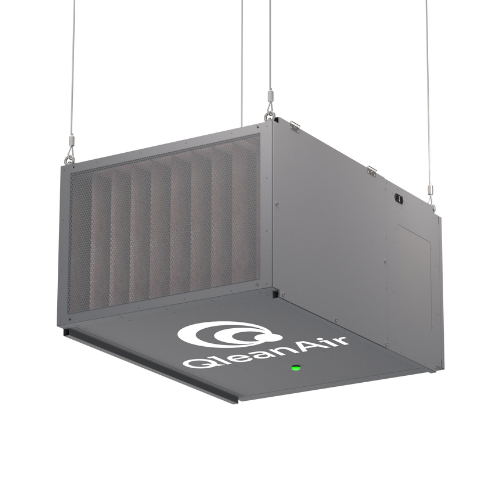
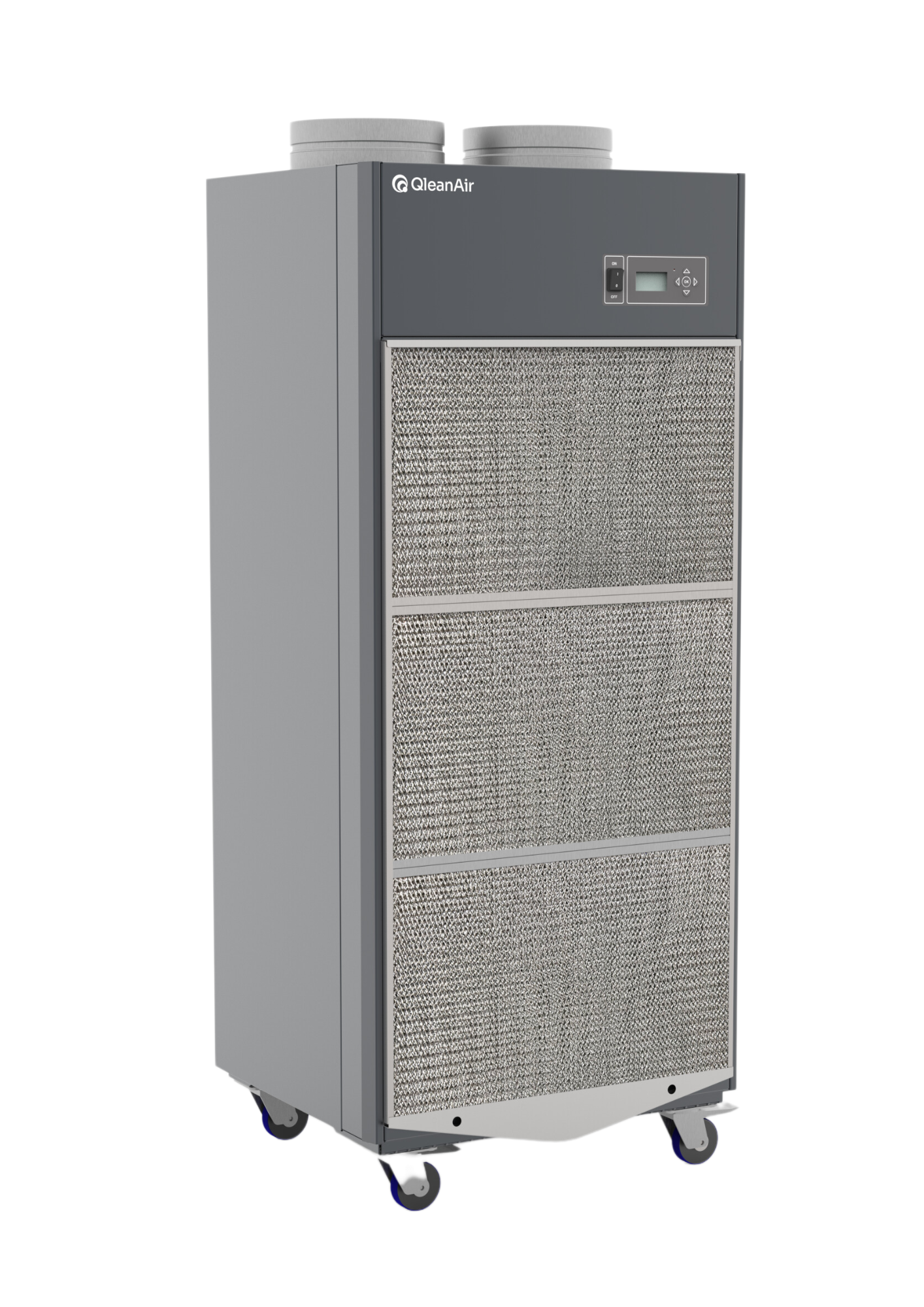
QleanAir has a broad range of industrial air cleaners for different industrial environments and types of contaminants, such as oil mist, welding fumes, dust, gases, and odours, etc. This includes floor-standing, wall-mounted, and ceiling-hung models, and sometimes a combination may be the right solution. Many industrial processes take place at or near floor level, where pollutants are also often generated. Floor-standing air cleaners can therefore be placed close to the process and where the need is greatest. They can be moved if machinery or production flows change and plugged into a standard power outlet without modifying the existing ventilation system.
How do you ensure that the air cleaning continues to work over time?
Ongoing service and maintenance are a vital part of a functioning air cleaning solution. Filters become loaded over time and need to be replaced at proper intervals for the air cleaner to continue working as intended.
QleanAir therefore combines air cleaners with regular service and filter replacements adapted to the environment and usage. This is an important part of our long-term offering, where we ensure a constant airflow over time and offer a lifetime performance guarantee on our air cleaners.
What advice would you give an industrial company looking to take the next step?
Start with the need, not the product. Look at what processes you have, what contaminants are generated, how they spread, and what you actually want to improve. Once that picture is clear, it becomes much easier to determine which measures are relevant for your own operations.
Would you like to know more about indoor air quality in your business?
Feel free to contact Matz for an initial, non-binding conversation.
Contact us